Purdy Sweet Cottage - Lake Rosseau Custom Cottage Design

New Legacy Cottage Coming Soon to Muskoka
Set on the shores of Lake Rosseau in Muskoka, Purdy Sweet Cottage is a thoughtfully designed custom lakehouse that blends timeless architecture with modern performance.
This 3D rendering walkthrough offers a full preview of the home’s exterior, showcasing a refined mix of classic Muskoka, Cape Cod shingle-style, and Craftsman-inspired design.
The architecture draws on classic coastal forms—high-pitched rooflines, detailed trim, and layered shingle textures—reinterpreted for a Muskoka setting. The result is a warm, enduring cottage aesthetic that feels both familiar and elevated.
Designed with longevity and livability in mind, this home reflects our studio’s commitment to high-performance building science, durability, and clean, intentional detailing. Every element—from massing to material transitions—has been carefully considered to create a home that will age gracefully for generations.
If you're planning a custom home or cottage in Muskoka, this project reflects the level of detail and care we bring to every design.
Below, Sophie shares the thinking and design approach behind this highly personal Lake Rosseau cottage.
Check our Youtube and Instagram for more architectural walk-throughs, custom home designs, and Muskoka cottage projects.

A Personal Project, Designed to Last
Purdy Sweet Cottage is a deeply personal project—one designed not for a client, but for my own family. Set on the shores of Lake Rosseau in Muskoka, this custom cottage reflects not only my design philosophy, but also years of lived experience building, refining, and rethinking what a long-term family cottage should be.
Designing for yourself is both a privilege and a challenge. It brings a level of care and attention that can quickly turn into overthinking every detail.
Over the past 15 years, we’ve built and moved multiple times, always knowing there was a possibility we wouldn’t stay long-term. Working in this industry, it’s easy to remain detached—styles evolve, ideas improve, and there’s always the sense that the next project will be better.
This time is different.
We approached Purdy Sweet Cottage as a place to settle, to put down roots, and to design not for resale, but for longevity—both in how it functions and how it feels over time.

Finding the Right Property on Lake Rosseau
Having spent the last 15 years on Lake Joseph, and with family ties to Lake Muskoka, we hadn’t anticipated a move to Lake Rosseau.
But this property stood out immediately.
In today’s Muskoka market, large, private parcels—especially vacant ones—are increasingly rare on the “Big Three” lakes. Our previous build was a true outlier: over 470 feet of frontage, 4 acres, and adjacent vacant land, all set at the end of a quiet road. It was a special property, but it also came with constraints—most notably its elevation, perched high on a cliff above the lake.
We didn’t expect to find that level of privacy again—but we did. This property offered everything we loved about our previous lot, now paired with a much flatter, more usable landscape.
With just under 500 feet of frontage and approximately 50 acres of land, it provides a remarkable sense of scale and seclusion. The site is buffered by three vacant lots on one side and a double lot on the other, separated by a natural creek—creating a level of privacy that is increasingly difficult to find. Positioned at the end of a dead-end road, it has a quiet, protected quality that immediately resonated.
What made it even more compelling was that it is fully vacant. While that can be daunting for many, it was a major draw for us. Having designed on a vacant site before, we value the ability to shape the land, carefully position the home, and define how the architecture engages with its surroundings from the ground up.
Located on the east side of Lake Rosseau near Windermere House, the property is also rooted in a rich architectural history. The character of the Windermere area—with its classic detailing and longstanding cottage traditions—became an important influence in shaping the design direction.
Unlike our previous builds, which were defined by steep topography, this site is relatively flat. That shift opens up entirely different opportunities—allowing the cottage to feel more connected to the landscape, improving accessibility, and supporting a design approach that is better suited for long-term living and aging in place.
An enormous thank you goes out to Chris Blair and the team at Waterfront Muskoka for helping us secure this amazing property.


Design Direction: A Shift Toward Timeless Architecture
While many of our past projects have leaned more transitional or modern, this home intentionally moves in a more traditional direction.
Because we’re designing this cottage for the long term, longevity in style was a primary driver. Rather than following current trends, the goal was to create a home that feels established from day one—something that will age gracefully and remain relevant for decades.
The historic character of the Windermere area played an important role in shaping this direction. The architecture surrounding Windermere House carries a level of detail, proportion, and character that is often missing in newer construction. That influence, combined with a long-standing appreciation for Cape Cod and shingle-style homes, led us toward a design language that feels both timeless and regionally grounded.
Shingle-style architecture, while not traditionally native to Muskoka, translates naturally to this setting. Its emphasis on layered materials, soft transitions, and cohesive massing aligns closely with the character of historic Muskoka cottages—allowing it to feel appropriate rather than imported.
The result is a cottage rooted in Cape Cod and shingle-style architecture, thoughtfully adapted for the Muskoka landscape—balancing tradition with a more restrained, contemporary sensibility.

Layering Detail: Designing with Depth and Intent
One of the core principles driving this design is a commitment to highly detailed exteriors.
Much of today’s residential construction trends toward simplified, flat facades that lack depth and character. As certain styles gain popularity, they often move from carefully considered custom designs into broader market applications—where, through cost-cutting measures, much of the original intent and richness is lost.
For this project, the goal was the opposite: to create a home with depth, shadow, and visual interest in every season.
While there are always cost implications associated with more detailed design, I strongly believe that quality should take precedence over size. A slightly smaller home, executed with care and intention, will always feel more enduring than a larger one that lacks refinement.
The exterior is the first impression of a home—it’s what is experienced daily, in every light and every season. Once built, it is also the most difficult and costly aspect to meaningfully change. Because of that, it deserves a level of attention and investment that reflects its importance.
Key architectural elements of this design include:
Flared shingle walls and steeply pitched rooflines
Layered trim detailing paired with cedar shake siding
Stone veneer bases that visually ground the structure
Wraparound porches and a prominent stair tower
An eyebrow dormer and copper roof accents
An octagonal turret porch
Each of these elements is carefully composed to work together, creating a cohesive exterior that feels layered, intentional, and established—rather than newly constructed.

Blending Shingle Style with Muskoka Tradition
While the foundation of the design draws from East Coast shingle-style architecture, it was important to root the cottage in its Muskoka context.
This was achieved through the integration of:
Timber brackets and exposed wood structure
Granite-based stone veneer
Traditional Muskoka proportions and massing
The result is a hybrid approach—one that feels authentic to both architectural traditions.
Material Palette: Designed for Longevity and Context
The material selection reinforces both durability and timelessness:
Composite silver cedar-look roofing (Enviroshake)
Semi-solid stained cedar shakes in a grey-brown tone
Charcoal grey / navy window and trim package
Copper accents for warmth and aging character
Hemlock soffits and ceilings in a mid-tone stain
A blended stone veneer in natural grey and brown hues
Together, these materials create a palette that will weather gracefully over time while remaining visually grounded in the landscape.

Designing for Comfort: Porches, Shade, and Real Use
The cottage is oriented southwest, making solar control a key consideration from the outset.
Rather than relying on large expanses of glass that require constant shading, the design incorporates deep, covered porches to provide passive solar control. These overhangs reduce heat gain during the summer months while still allowing for expansive views and strong indoor-outdoor connection. The result is a more comfortable and usable interior without over-reliance on mechanical cooling.
This approach reflects how we actually live in a cottage setting—prioritizing spaces that can be enjoyed throughout the day, even in peak sun.
In the winter, the porches serve an equally important role. They help protect openings from snow accumulation, reduce exposure at door thresholds, and provide a buffer that can mitigate ice buildup along the roof edges. These simple architectural moves contribute to both durability and long-term performance.

The Spa Porch: Rethinking a Muskoka Essential
One of the most important—and most used—features in our past homes has been the hot tub.
However, in Muskoka, bugs are often overlooked in outdoor design. While open-air hot tubs are common, they can become largely unusable during peak seasons due to insects—especially in the evenings, when these spaces are typically meant to be enjoyed.
At the same time, this project also prompted us to rethink the traditional Muskoka room.
While screened-in Muskoka rooms are a well-loved feature of Muskoka cottages, our experience—living at the cottage year-round—has been that they are often underutilized square footage, frequently becoming storage spaces for patio furniture during the off-season. As a result, both for ourselves and many of our clients, we’ve shifted toward designing four-season Muskoka rooms—spaces that function more like a family room, with large windows or sliding doors that maintain the same connection to the outdoors, but remain fully usable year-round.
Because we’ve incorporated that four-season space elsewhere in the home, it allowed us to approach this area differently.
Rather than treating the hot tub as an exposed outdoor feature, we designed a fully screened-in spa porch—combining the comfort of a traditional Muskoka room with a dedicated wellness space designed specifically for daily use.
The spa porch includes:
An in-ground 8' x 10' hot tub
Outdoor TV and kitchen area
Sauna and integrated patio heaters
A vaulted ceiling with a custom timber eyebrow dormer
Screen panels with a wood X-detail, referencing traditional Muskoka room detailing
By enclosing the space while maintaining airflow and connection to the outdoors, the spa porch becomes usable in all seasons—protected from insects, rain, and snow without sacrificing the cottage experience.

A Traditional Exterior, Backed by Modern Building Science
While the exterior of the cottage is rooted in traditional architectural language, the performance is decidedly modern.
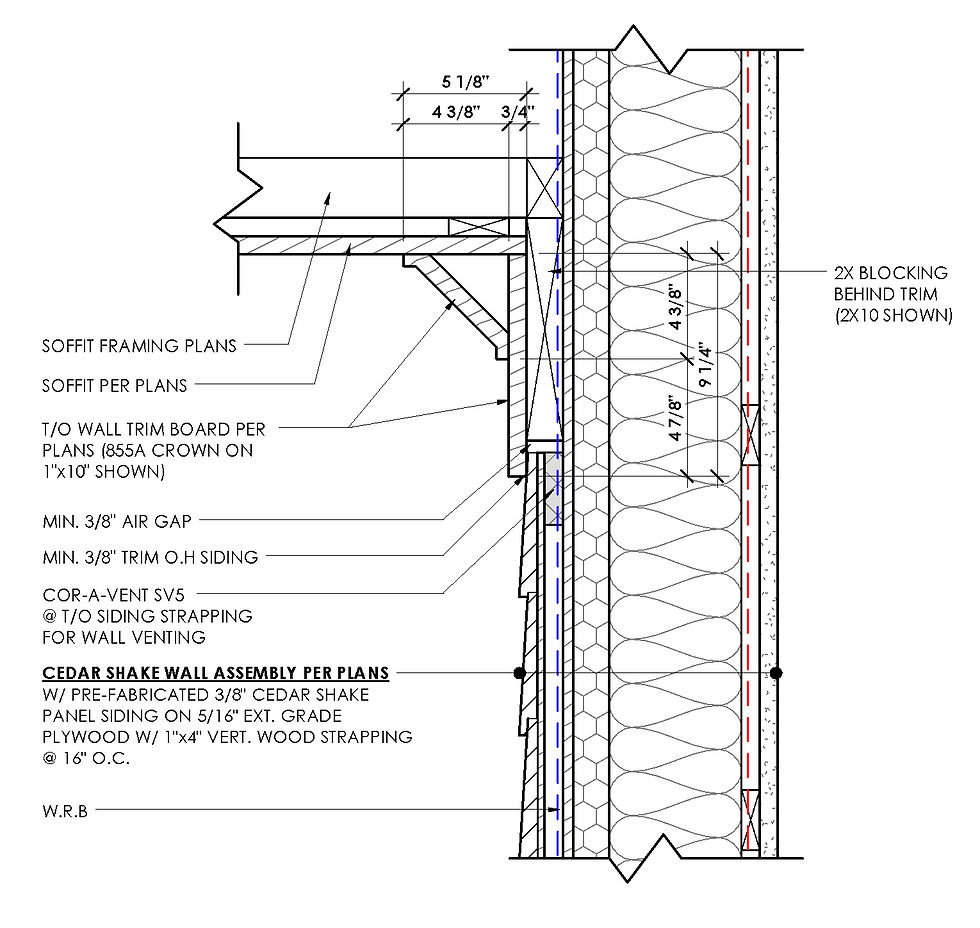
A key part of the design process was ensuring that every aesthetic decision was supported by thoughtful construction detailing. Elements like trim profiles, soffit lines, and window and door heights were carefully coordinated so that everything aligns with precision. This level of detailing is what allows a traditional design to feel resolved rather than applied—and it also ensures the build can be executed efficiently on site.
Beyond appearance, the cottage has been designed with a strong focus on building science, energy performance, and long-term durability.
We are incorporating a geothermal system and planning a solar array on the property to offset energy use—an approach that is not always straightforward in Muskoka due to bedrock conditions. However, a unique area of soft soil on the site makes geothermal viable here, allowing us to push the performance of the home further than typical cottage construction.
The building envelope has been carefully considered throughout:
An ICF foundation provides a high-performance base, with wall heights optimized to standard block dimensions for efficiency
Exterior walls use ZIP-R9 sheathing to introduce continuous insulation and reduce thermal bridging
A fully vented rainscreen assembly replaces traditional cedar breather systems, improving drying potential behind the cedar shake siding
Triple-pane windows are used throughout for improved winter performance and energy efficiency
Windows are raised slightly off the floor to further reduce thermal bridging at critical junctions
Material choices also prioritize indoor air quality and long-term performance. Mineral wool insulation is used in place of spray foam wherever possible, paired with a vapour-open membrane (Intello Plus) rather than traditional polyethylene, allowing the wall assembly to manage moisture more effectively over time.
Additional systems and detailing include:
Radiant in-floor heating throughout all levels
Open web wood joists and dropped ceiling zones to allow for clean, fully concealed mechanical runs
Vented roof assemblies for improved durability
Deep overhangs and covered porches to provide passive solar control and reduce cooling loads
Even structural decisions were influenced by long-term livability. A lowered floor framing strategy allows the main floor to sit closer to grade, improving accessibility and supporting aging in place without compromising the overall design.
Hummingbird Hill Homes has been contracted to lead construction on this project, with their commitment to high-efficiency building setting them apart.

Program & Scale: Designing What We Actually Need
The cottage is approximately 6,500 sq ft and includes:
6 bedrooms
2 offices
A home gym and golf simulator
Prep kitchen/pantry
Oversized attached 2-car garage
The property also includes a 1,500 sq ft detached storage garage, sports court, and boathouse (currently in design).
Originally planned closer to 7,500 sq ft, the design was refined through value engineering—focusing on how we actually live rather than building to the maximum allowable size.
In shaping the program, careful consideration was given to both current needs and how the home will evolve over time as our family grows. The goal was to create a cottage (though really our primary home) that feels accommodating and flexible, without becoming overly large or underutilized.
The result is a home that prioritizes livability and intention—designed to feel complete and comfortable, rather than expansive for its own sake.


Looking Ahead
While the exterior leans traditional, the interior will incorporate a more transitional approach—balancing timeless architecture with modern living.
We’ll be sharing more as the design continues to develop.
Interior design and furnishing for this project will also be led by Sophie Clapperton Designs Inc., ensuring a cohesive vision from architecture through to the final details.

To discuss your project and let us help you design the Muskoka home, cottage, or boathouse of your dreams.
Proudly serving the Muskoka Lakes region and Ontario cottage country: Port Carling, Bala, Torrance, Minett, Rosseau, Windermere, Parry Sound, Georgian Bay, Mactier, Bracebridge, Gravenhurst, Huntsville, Dorset, Baysville, Dwight, Lake of Bays, Muskoka Lakes, and Seguin.
Look for our projects on: Lake Joseph, Lake Rosseau, Lake Muskoka, Mirror Lake, The Indian River, Lake of Bays, Lake Vernon, Mary Lake, Peninsula Lake, Georgian Bay, and many more.